
The Golden State Killer and the Genetic Genealogy Revolution
- Jonathan Silva

- 13 de dez. de 2025
- 3 min de leitura

For forty years, California was haunted by a ghost. He had no face, only ski masks. He didn't just have one name; the press called him "The Visalia Ransacker," "The East Area Rapist," and "The Original Night Stalker."
Between 1974 and 1986, he committed 13 murders, more than 50 rapes, and 120 burglaries. He turned the safety of American suburbia into an illusion. People stopped sleeping with their windows open. Gun and guard dog sales skyrocketed.
But while the world searched for a monster in the shadows, Joseph James DeAngelo was hiding in plain sight. An ex-police officer, a Navy veteran, a family man. He was the perfect predator, armored by badges and white picket fences. Until 21st-century science found a chink in his armor: his own blood.
The Ritual of the Dishes and the Slaughter
To understand DeAngelo's terror, one must look at the sadistic mechanics of his crimes. He was not an impulsive killer; he was a combat strategist invading civilian homes.
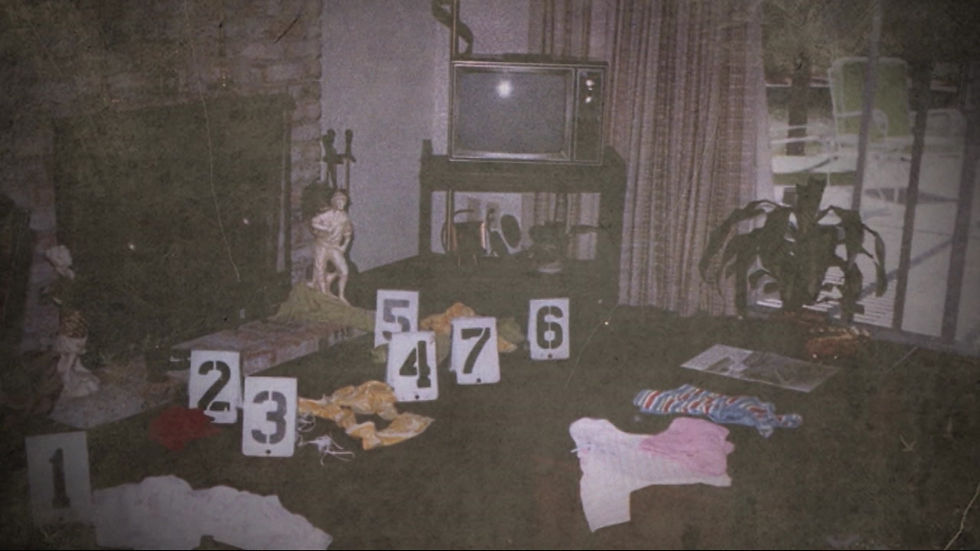
His attacks followed a nightmare script designed for total control. He would break into homes days in advance, unload the owners' guns, unlock windows, and hide bindings—often shoelaces—under the sofa cushions.
When he attacked, he woke couples with a blinding flashlight. Psychological torture was his signature: he bound the husband and stacked ceramic dishes or teacups on his back. The order was whispered through clenched teeth: "If I hear the dishes move, I'll kill everyone." While the husband lay paralyzed by the terror of making a fatal noise, DeAngelo violated the woman in the next room.
But in the final phase of his crimes, rape ceased to be the ultimate goal. The extermination began.
DeAngelo abandoned caution and began executing his victims with animalistic brutality. Although he carried firearms, he frequently opted for blunt force trauma. He used heavy objects found in the residence itself—fireplace logs, pipe wrenches, or pry bars—to repeatedly strike the victims' heads while they were bound and defenseless.
In cases where the situation spiraled out of control, such as with Dr. Robert Offerman, he executed the couple with gunshots at point-blank range. He left no witnesses, only shattered bodies and complex rope knots (the "Diamond Knot") that hinted at a military background.
The Ghost of Visalia: Police sketches based on descriptions from terrified survivors.
Reverse Engineering the Family
For decades, the killer's DNA sat in frozen evidence kits, a code without a key. He wasn't in the criminal system (CODIS). It seemed like the perfect crime.
In 2017, investigator Paul Holes and genealogist Barbara Rae-Venter tried something radical. They didn't search for the killer; they searched for his family. They uploaded the monster's genetic profile to GEDmatch, a public database where ordinary people search for their ancestors.
Science didn't point to DeAngelo immediately. It pointed to third and fourth cousins who had never met him. From there, investigators built a "reverse family tree," going back to great-grandparents in the 19th century and climbing down again, branch by branch, looking for a man who fit the killer's geographic and age profile.
Out of thousands of people, the tree funneled down to a single name in Citrus Heights, Sacramento.
The Monster in the Backyard
On April 24, 2018, the 40-year hunt ended not with a shootout, but with a whimper. Police surrounded Joseph DeAngelo's home. The man who terrorized the state was now a 72-year-old senior, visibly frail, walking out to tend to his lawn.
When officers approached him, the ferocity of the "Night Stalker" was gone. DeAngelo seemed confused, muttering about a "roast" he had left in the oven.
However, in the interrogation room, the facade of the senile grandfather cracked. Alone in the room, cameras caught DeAngelo speaking in a sinister voice, referring to an internal entity he called "Jerry." "I didn't have the strength to push him out," he whispered to the walls, "He made me do it." It was a narcissist's final attempt to avoid responsibility by blaming a nonexistent dual personality.
The Legacy: Privacy vs. Justice
In 2020, DeAngelo pleaded guilty to 13 murders and 13 kidnappings to avoid the death penalty. In court, confined to a wheelchair and with his mouth gaping in a vacant expression, he listened to his victims' children describe how he destroyed their lives with fireplace logs and ceramic dishes.
The Golden State Killer case closed the loop on impunity. It proved that in the age of genetic information, there is no such thing as a "dead file." You can wipe fingerprints, burn clothes, and wear masks, but you cannot run from the biology you share with your distant cousins.
The ghost was exorcised by science.


Comentários